BLT Demonstrates Advantages of Additive Manufacturing for Advanced
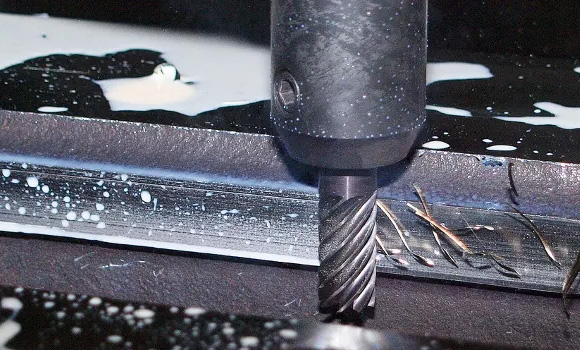
The study demonstrates the advantages of AM in producing cutting tools, including reduced material waste, increased precision, and improved tool service life. *
Summary
The study demonstrates the advantages of AM in producing cutting tools, including reduced material waste, increased precision, and improved tool service life. **BLT**'s technology has the potential to disrupt the traditional subtractive manufacturing processes, enabling the creation of highly customized cutting tools that meet the demands of advanced manufacturing. As the demand for high-performance cutting tools continues to grow, **Additive Manufacturing** is poised to play a crucial role in shaping the future of the tooling industry. [[metal-additive-manufacturing|Metal Additive Manufacturing]] is a key technology in this development, allowing for the production of complex geometries and customized cutting tools. The impact of **BLT**'s research will be significant, as it has the potential to increase efficiency and reduce costs in various industries, including **machining** and **electronics**.
Key Takeaways
- Additive Manufacturing can produce customized cutting tools with complex geometries
- The use of Additive Manufacturing can improve efficiency, reduce costs, and increase product quality
- The adoption of Additive Manufacturing in the tooling industry is expected to increase in the coming years
- The high cost of AM equipment and materials is a significant challenge to overcome
- The lack of standardization in AM processes and materials may result in inconsistent quality and performance
Balanced Perspective
The study published by **BLT** highlights the potential benefits of using Additive Manufacturing in producing cutting tools. While the technology has shown promise, it is still in the early stages of development. The cost of AM equipment and materials is currently high, making it challenging for small and medium-sized enterprises to adopt this technology. However, as the industry continues to evolve, we can expect to see improvements in efficiency, reduced costs, and increased adoption of **Additive Manufacturing**. The use of **metal Additive Manufacturing** is a key aspect of this development, allowing for the production of complex geometries and customized cutting tools. [[metal-additive-manufacturing|Metal Additive Manufacturing]] will play a crucial role in shaping the future of the tooling industry.
Optimistic View
The use of Additive Manufacturing in producing cutting tools is a game-changer for the industry. **BLT**'s technology has the potential to increase efficiency, reduce costs, and improve product quality. With the ability to produce customized cutting tools with complex geometries, manufacturers can optimize their production processes and reduce waste. The extended service life of AM-produced cutting tools also reduces the need for frequent replacements, resulting in significant cost savings. As the demand for high-performance cutting tools continues to grow, **Additive Manufacturing** is poised to play a crucial role in shaping the future of the tooling industry. [[additive-manufacturing|Additive Manufacturing]] will enable the production of cutting tools with superior performance, and **BLT** is at the forefront of this development.
Critical View
While **BLT**'s study highlights the potential benefits of Additive Manufacturing in producing cutting tools, there are still significant challenges to overcome. The high cost of AM equipment and materials, combined with the limited availability of skilled labor, may hinder the widespread adoption of this technology. Additionally, the lack of standardization in AM processes and materials may result in inconsistent quality and performance of cutting tools. As the industry continues to evolve, it is essential to address these challenges and develop more efficient and cost-effective solutions. The use of **Additive Manufacturing** in producing cutting tools is not without its risks, and **BLT**'s technology is still in the early stages of development. [[additive-manufacturing|Additive Manufacturing]] is not a silver bullet, and its limitations must be carefully considered.
Source
Originally reported by Metal Additive Manufacturing magazine